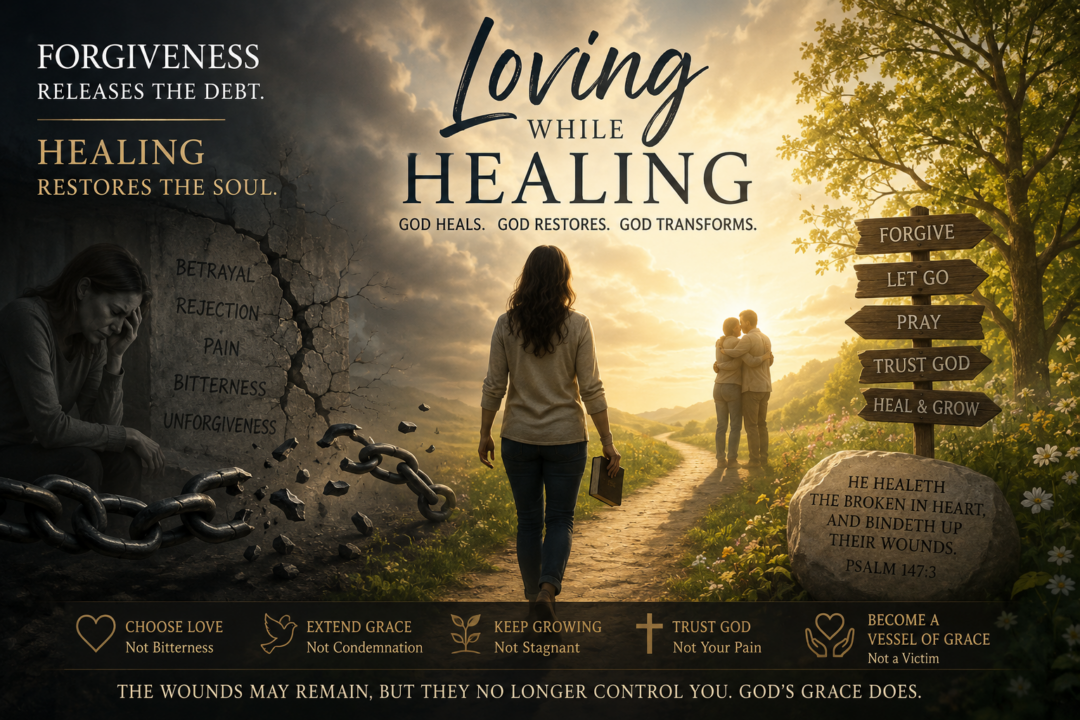
The Sacred Journey of Forgiveness and Restoration
There is a unique kind of pain that comes when the wounds we carry were inflicted by people we once loved deeply. Betrayal, rejection, abandonment, harsh words, broken promises, and disappointments often leave scars that do not disappear overnight. Yet one of the most difficult and transformative journeys in life is learning how to love while healing—choosing to walk in love toward those who hurt us while God is restoring our wounded hearts.
Many people believe that forgiveness instantly removes pain. In reality, forgiveness is often the beginning of healing, not the end of it. You may genuinely forgive someone and still find yourself processing the emotions, memories, and consequences of what happened. Forgiveness releases the debt; healing restores the soul.
The Bible reveals this truth through the words of Jesus on the cross. While enduring unimaginable suffering, He prayed:
“Father, forgive them; for they know not what they do.” (Luke 23:34)
Jesus forgave before the wounds of the crucifixion were healed. His forgiveness was not dependent upon the actions, repentance, or understanding of those who hurt Him. It was an act of obedience, love, and trust in the Father.
Loving while healing does not mean pretending that the pain never happened. It does not require denying the reality of the wound or allowing continued abuse. Instead, it means refusing to let bitterness become your identity. It is the decision to let God transform your pain rather than allowing pain to transform you.
The Apostle Paul wrote:
“Be kind one to another, tenderhearted, forgiving one another, even as God for Christ’s sake hath forgiven you.” (Ephesians 4:32)
Notice that Paul connects forgiveness to God’s forgiveness toward us. When we remember the mercy we have received, we find strength to extend mercy to others. This does not excuse wrongdoing; it reflects the character of Christ.
One of the greatest challenges in healing is resisting the temptation to keep reopening old wounds through resentment. Bitterness often disguises itself as justice, convincing us that holding on to anger protects us from future hurt. Yet Scripture warns:
“Looking diligently lest any man fail of the grace of God; lest any root of bitterness springing up trouble you, and thereby many be defiled.” (Hebrews 12:15)
Bitterness never remains contained. It spreads into relationships, thoughts, attitudes, and even our relationship with God. Forgiveness uproots bitterness, but healing requires continually surrendering our pain to God whenever it resurfaces.
Loving those who hurt us is not natural; it is supernatural. Jesus taught:
“Love your enemies, bless them that curse you, do good to them that hate you, and pray for them which despitefully use you, and persecute you.” (Matthew 5:44)
This command is not merely about our enemies. It speaks to anyone whose actions have wounded us. Sometimes the greatest evidence of healing is not that we forget the hurt, but that we can sincerely pray for the well-being of the person who caused it.
Healing often unfolds in stages. Some days you feel free; other days old memories return unexpectedly. This does not mean your forgiveness was insincere. It simply means restoration is a process. Just as physical wounds heal layer by layer, emotional and spiritual wounds often heal gradually under God’s care.
The psalmist reminds us:
“He healeth the broken in heart, and bindeth up their wounds.” (Psalm 147:3)
God does not rush the healing of a broken heart. He tends to it with patience, compassion, and wisdom. Every prayer, every act of forgiveness, every surrendered tear becomes part of His restoring work.
Loving while healing also requires wisdom. Forgiveness does not always restore trust immediately. Reconciliation may be possible in some relationships and impossible in others. Trust is rebuilt through consistent repentance, accountability, and changed behavior. Forgiveness is commanded; reconciliation requires mutual participation.
As believers, our goal is not merely to survive hurt but to emerge from it reflecting Christ more clearly. Joseph demonstrated this after being betrayed by his brothers, sold into slavery, and unjustly imprisoned. Years later he told them:
“But as for you, ye thought evil against me; but God meant it unto good.” (Genesis 50:20)
Joseph’s healing enabled him to see God’s purpose beyond human betrayal. The wound remained part of his story, but it no longer controlled his heart.
Perhaps the greatest miracle of loving while healing is that God uses the very pain that once threatened to break us to deepen our compassion, strengthen our faith, and refine our character. The person who has been healed by grace often becomes a vessel of grace for others.
When you choose forgiveness, you free your heart from the prison of resentment. When you continue loving while healing, you allow God to complete the work He has begun within you. And when healing finally matures, you discover that the pain no longer defines you. God’s grace does.
Love while healing. Forgive while growing. Trust while restoring. In time, the wounds that once caused tears may become testimonies of God’s faithfulness, proving that His love is greater than the deepest hurt and His healing is stronger than the greatest wound.
Comments are closed